When the subject of camp came up this year, I felt convicted, but, there was no way I was going to go to camp, let alone be a counselor. There was no way I could. I had a lot of work on my plate already. I had students to teach and papers to grade and I was homeschooling two kids. I would be away from my wife for an entire week, someone I had not been away from since we had married just two years before! Yet, the conviction persisted and over those few months before camp I found myself praying about it, wrestling with it, and wringing my hands over it. And every time I saw our pastor I would ask him, “Any more counselors yet?” His answer was always “No.”
At first, I thought maybe this was God trying to tell me to rally the troops. Right? There were able-bodied men in the church that could do this. Shouldn’t they do this? And, the thought persisted: If they should, then doesn’t that mean I should, too? For weeks I tried to sweet talk, consul, trade, and blackmail the others, but to no avail. Everyone was either too busy, uncomfortable, or had already done it in the past and didn’t want to do it again. About a month before camp, I sat down at my computer and found myself on the Camp Fircroft website, filling out an application to be a counselor for Elementary Camp.
I had no idea what I was getting myself into. But, for whatever reason, I was convicted and I knew from experience, it was best to obey.
What Camp was Like?
The night before camp came, and my son, Jeremiah and I made the long trek down beyond Bandon to Langlois and drove the long, winding road up to the camp. I slowed down as we rounded the last corner, Camp Fircroft coming into view below. I turned onto the gravel road as I surveyed the place. It was empty the day before camp was scheduled to begin. I knew I would like it this way. But in less than 24 hours, the camp would be inundated with campers, counselors, and other volunteers, and then the experience of camp would truly begin.
Camp Fircroft: situated on Langlois Mountain in southern Oregon, surrounded by majestic fir trees, rolling hills, steep terrain, cabins scattered on this little plot of land – it has been in continuous operations since 1957. With its large Dining Hall directly to the right, a maintenance cabin, and a large concrete basketball court, where there are several carpet ball games set up near the tree line, it is a picturesque scene, and I took the top road and drove slowly along the ridge until I found a place to park near the back. Jeremiah and I grabbed our luggage and walked the short distance down the hill to our cabin, got situated, and then tried to relax. It was late, and we were anxious for the full day ahead of us the next day. Within an hour or so, my junior counselor arrived, and after quick introductions, we all went to bed.
The first morning, we woke and spent the early part of the day getting the cabin ready. We had a Staff meeting down at the Dining Hall, where we were given the layout of the land, the expectations, the Dos and Don’ts of Camp, instructions from the nurse, and so on. The campers didn’t start arriving until 3pm, and our cabin remained empty as we waited in suspense to see who we would get.
By 4pm, our first camper came through the door. Then another. And, as if a gate somewhere had been serendipitously opened, nine boys ranging in age from 8 to 10 came through the door and scrambled with their nervous parents to get their bunks arranged, all their belongings unpacked, and farewell hugs exchanged. Instinct kicked in, and I pulled out my phone and started asking for names and ages, making a list so I knew who we had, where they were from, and if they had any allergies, etc. Within the hour, we organized our rag-tag group of boys and led them over the hill to the Dining Hall, where all the campers met and were welcomed by the Director.
We had dinner and Chapel and then settled back into our cabin for the night. It was then that I pulled out a piece of paper, each boy sitting on his bunk, and I gave them the rules that I had received from one of the elders of our Church. With wide eyes and open mouths, they listened as I read the Terry Newport Rules for Camp (a gentleman from our church who had been a counselor at Fircroft for years). Those rules were:
- Do not touch anything that does not belong to you.
- Your area is your area; stay out of other people’s areas!
- When I say lights out, I MEAN IT! No talking!
As I finished, the kids erupted in a wave of chatter. But my junior counselor leaned over and whispered to me, “I actually remember Terry telling us those rules when I was in Elementary Camp!”
In the morning, my eyes opened at around 4:30am, which is when I normally get up and try to get work done at home – grading papers, writing, preparing for Sunday school or a small group I’m teaching that week – when it is quiet, and everyone else is still asleep. I slipped out of the cabin, walked down to the Dining Hall, and spent a few hours sitting in a lawn chair outside with my laptop on my lap. Then, before I knew it, it was time to get everyone up, and we went down to breakfast. By lunch, I found myself on my own for a moment, walking back to the basketball court, wondering to myself what I had gotten myself into. Needless to say, I was a mix of emotions, and I was pretty certain already that I was not at all cut out for the task.
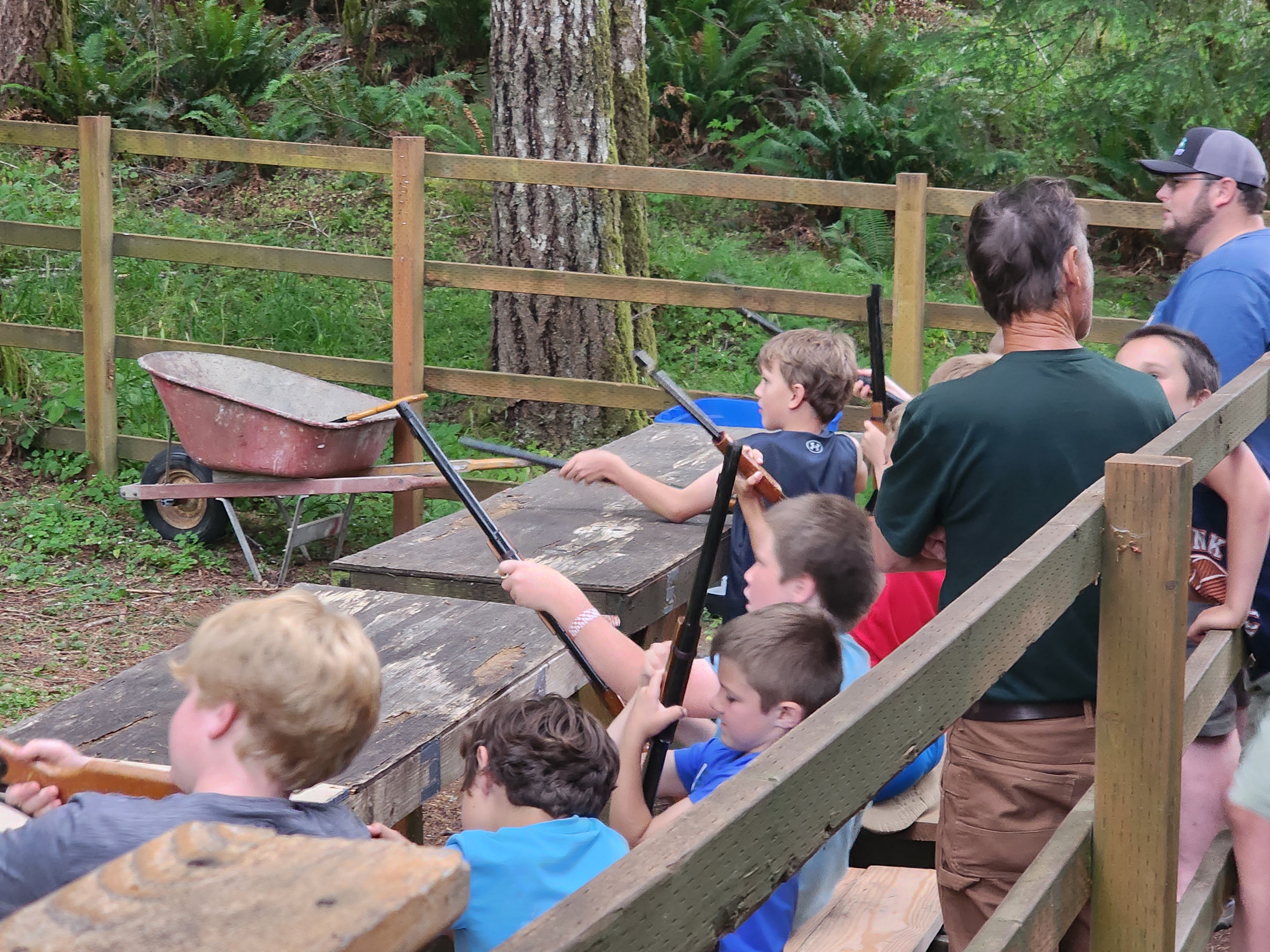
The next day, though, after we slipped into a routine of breakfast, lunch, dinner, and escorting campers from swimming in the pool to paintball, to BB guns, to archery, with chapel in the morning and the evening, brought a more settled feeling about my circumstances. I only had a few more days left, so I was pretty sure I could do it. I was certain would not be doing it again, and it was becoming rather clear by that point why it was so hard to get volunteers.
The Quester!
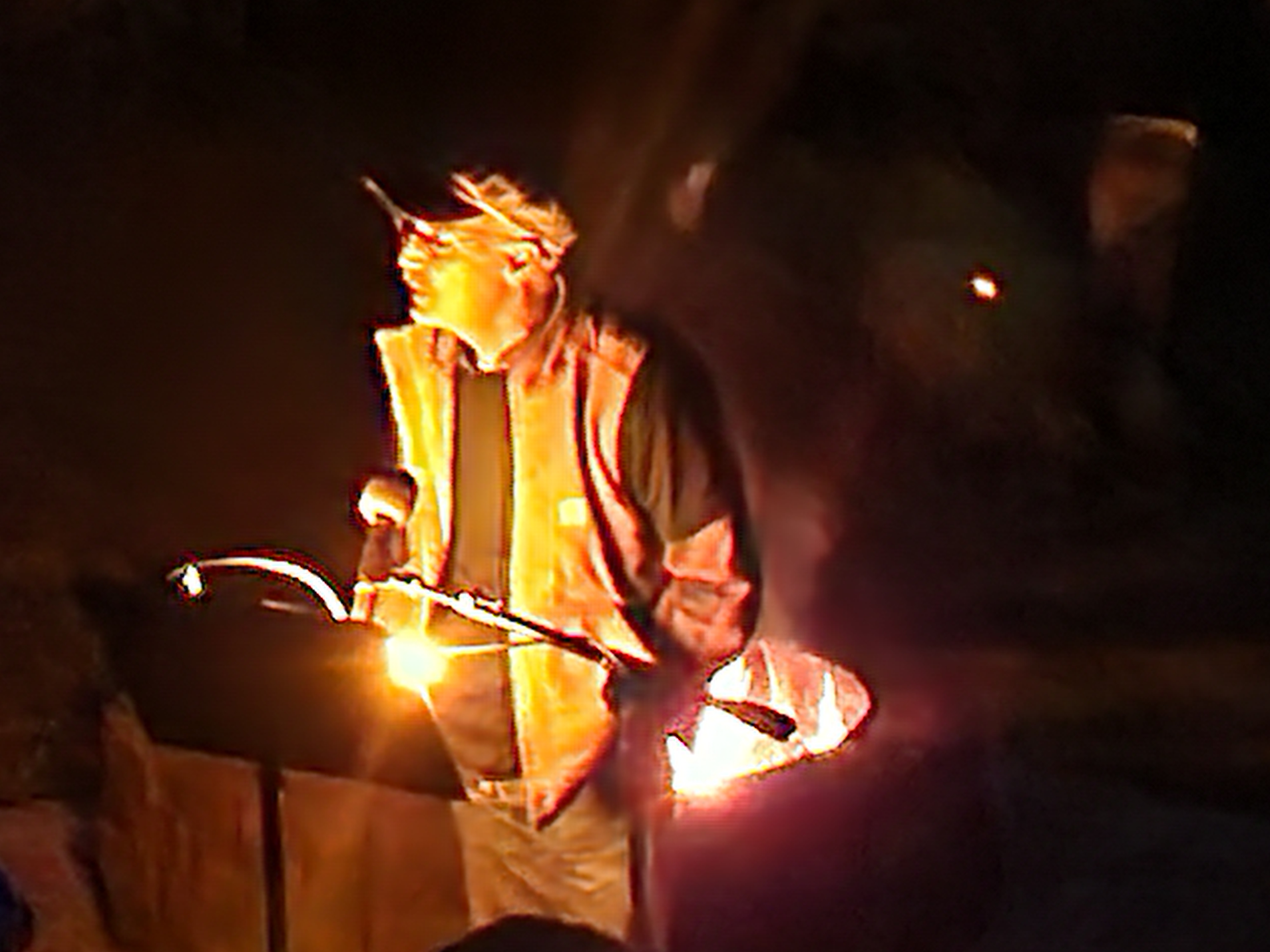
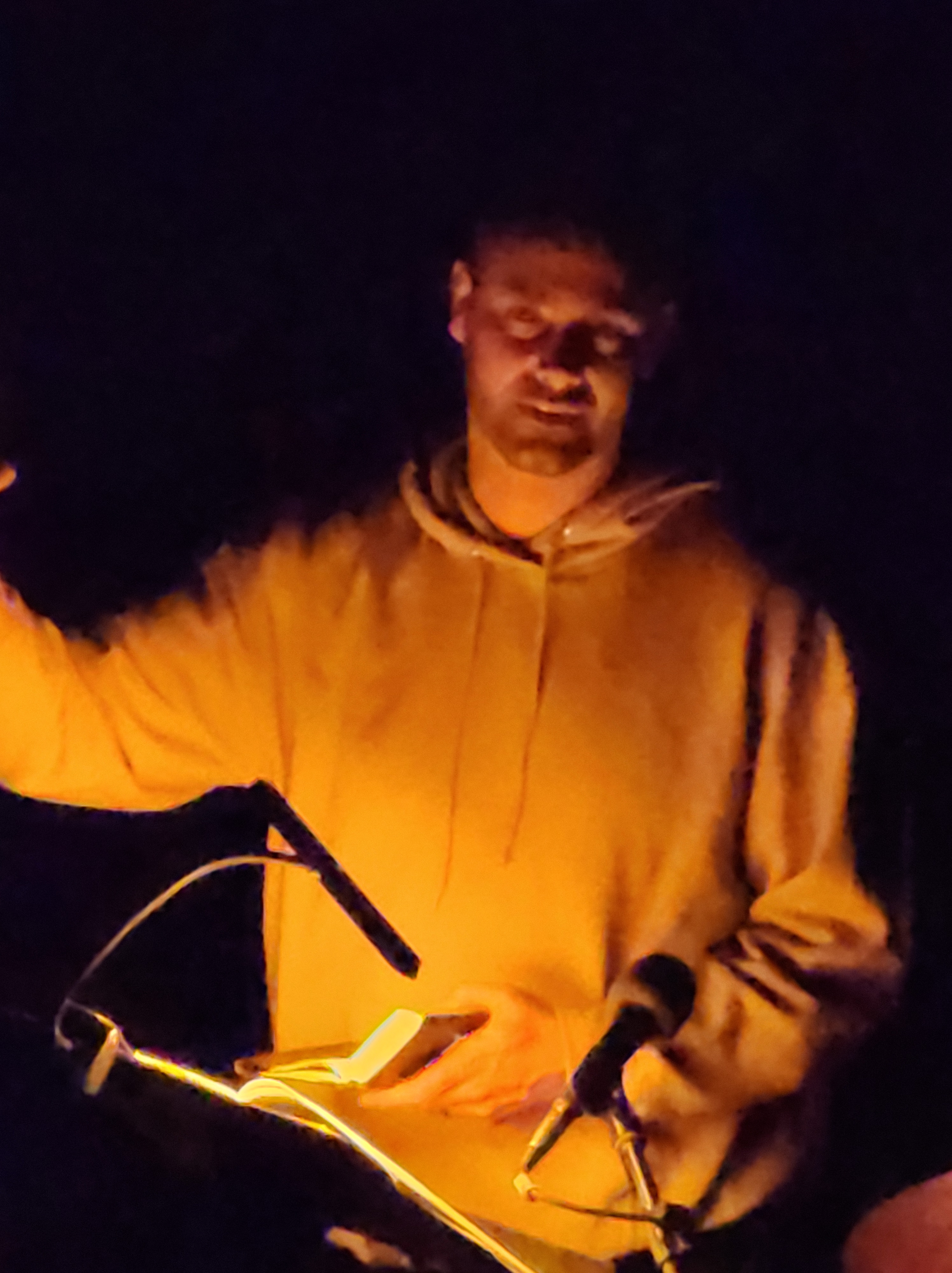
On the very first day, we were introduced to the speaker, Rousseaux Brasseur, a children’s and family pastor from out of Jacksonville, Oregon, who walked up to the podium during our first Chapel and started talking about questions. Right off the bat, I was intrigued. Questions are my bread and butter. It is what I do and what I’ve dedicated my life to pursuing. Questions about God. Questions about us. Questions about why we are here? Where did we come from? Where are we going? And what is the purpose of all of it?
The Quester asked these kinds of questions as well. He had five questions throughout the week that he asked these young campers to consider:
Who am I?
Where did I come from?
What’s the meaning of my life?
How do I know right from wrong?
What is my future beyond this lifetime?
I remember, as I sat there watching him animatedly and excitedly interacting with the kids, I realized that this was no ordinary camp where kids were being indoctrinated to simply accept what their parents or their church community believed. Instead, they were being challenged to think for themselves. To ask questions. To go on a quest. An adventure. The adventure of life.
Chapel became something different for me after that first session. I heard kids sing louder than I think I’ve ever heard anyone sing before. They would shout at the top of their lungs, stomp their feet, and clap their hands to the beat of the music, and were always excited and often jumping out of their seats to go up and get a prize or a reward for getting a question right or to try and win a dance contest.
Suddenly, I realized that I was surrounded by innocent creatures whose voices were like the sounds of angels. This was not the ordinary worship I was accustomed to. It was different. It was simple yet profound. In the lyrics, I saw these kids crying out to God, trying to wrestle with the big questions in front of them, and not just the questions Rousseaux posed, but really serious questions about life.
I discovered throughout camp that many of these kids are struggling with a difficult home life. Many of them are not from Christian homes or are Christians themselves. They are often from broken homes. From homes where there is some kind of abuse happening. Environments where they don’t know if they are going to get enough to eat or if they are even going to have a home for more than a day at a time. And this guy, clad in overalls and Converse sneakers, was able to rally these kids to ask questions that many people – many adults – never think to even ask.
Over the week, with his Quest Bible in hand, the Quester talked about the two greatest commandments, how the trinity was awkward math, how God made man in the beginning, and how he made woman. He took them on a journey through forests and over oceans and across mountain ranges, all in hopes that these kids might discover for themselves the answer to these important questions that society will demand they have an answer for when they are all grown up, maybe even before.
By the end of camp, the Quester and his community of campers had reached the end of their long journey. They finally made it to the Dominion of Destiny, where the kids explored the future they have beyond this life and what will happen to them after they die.
They talked about Jesus being the only way out of the predicament we find ourselves in and how we need to surrender to him as Lord of our life and believe that God raised him from the dead. He talked about our responsibility to make disciples and to be baptized and how we are reborn as children of God.
What Does it All Mean?
Camp is what Camp it is.
It is a lot of jumping around, a lot of screaming, a lot of playing and swimming in swimming pools and doing crafts and shooting arrows into bales of hay and playing paintball and night games and getting drenched by a firing squad of teenagers for getting packages in the mail. It’s all of these things and these activities and experiences frame the time these kids have during their week at camp each year.
But, more importantly, and something I think that runs through the minds of every volunteer at Camp Fircroft if even subconsciously, is how do we address the issues that kids have in today’s world and how we orient them in such a way that they come face to face with the person we know to be the living God?
This year that was done through a creative philosopher who presented a narrative of the gospel that posed questions to these children – questions they will all be facing in a few short years when they all step out on their own into a world that will demand that they follow the status quo without question, unless they can make an argument as to why they shouldn’t.
And let’s face it, kids today are wrestling with issues that we never had to contend with. The pervasiveness of the internet and all the temptations, distractions, and perversions that come with it. The lure of Hollywood and its mass packaging and wholesale of sin for the sake of the almighty dollar. A public school system that doesn’t even pretend anymore to be anything other than the indoctrination system it is. All these things weigh on kids today like a millstone around their necks, even if they don’t recognize it.
I found myself in Chapel one evening, sitting in a folding chair at the end of our row. And I suddenly started praying for these young boys who were essentially all but strangers to me. I don’t know what led up to it or what it was I was praying for exactly. But, I knew at that moment each one of them had been put there by God, in this place, and in this season of their life, and it was my responsibility to stand in the gap for them, to lift them up to our God and ask for them things they would not think to ask. It was, standing there amongst heavenly voices, innocent and pure, that I found a battle raging against principalities and all authorities in the supernatural realm.
Some of these kids are already struggling with difficulties. They are often labeled with disorders and branded with impulsive or overly fidgety tendencies. One of the boys in our cabin commented one day, as camp was drawing to a close, that he wished it would be a few days longer because he liked being able to eat. It was a stark reality that set deep. Some of these young people come to camp just so they have some kind of stability in their life, some just so they can be sure to get three meals a day. It’s hard to imagine, but it is true. Camp is often seen as incidental in the year, the thing we do with our kids so we can get them out of the house, so parents can get a break from them (we don’t really like to admit that), so they can run out some energy. But, it’s quite possible, for some of these kids, camp is truly the best time of their entire year. And with some of them, this one camp will be the only camp they ever attend. And for a few, it may be the only exposure they have to Christ.
At the end of camp, we received a testimony from one of the counselors, Ken, who talked about his experiences growing up with a sick mother and how her death was a darkness that crouched over him for years as he wandered until God found him and miraculously changed him. His story is unique to those often hosting camp, who have spent many years, maybe even the majority of their lives there, some even having come to Camp Fircroft themselves when they were kids. As for myself, I am more like Ken, having not been raised in a Christian home, nor did I know or understand who Jesus was while growing up. Camp is an enigma to me. A foreign experience.
But, regardless of where we come from or how we get there, each one of us has been tasked with the upward call of Christ. And there is no other perfect religion than to care for and pray for these young and growing souls.
What Changed for Me?
About halfway through camp, inspiration hit me, and I began to revel in work and writing ideas, exhilarated to get started, my thumbs flying on my phone as I escorted kids through the last two days. Even with my certainty that I would not be returning to be a counselor, I recognized at one point that I was not any different than anyone else. This realization came while I was sitting in my lawn chair at the paintball course, many of our boys waiting on the sidelines while others were up to shoot. As a few of the more challenging boys in my cabin goofed around, I overheard one of the other counselors getting after them to settle down and straighten up.
At that moment, I realized that it wasn’t just me. I wasn’t failing these kids because of my short temper or sour disposition. Other counselors were having the same issues with them that I did. Not only this, but they were having issues with their kids as well! I no longer took the nickname “Grumpy Old Man Steven” as personally as I had up to that point (the nickname my boys gave me on the second day of camp).
I actually started to revel in it.
At the last Chapel, we received word that a girl in the girl’s cabin had been saved. It was a bizarre thing to hear as if we needed to know this to prove that camp was a success. But, I think success is not measured by the number of decisions made for Christ on any given weekend. For, the messages received and conversations had during those five days will continue long after those days are over. The things that take place at Camp Fircroft will permeate those kids’ minds and hearts for years to come. Those seeds are planted, and we, as counselors and disciple-makers, our work is finished as the last day comes to an end and we have no way to know what kind of impact we are truly having on these kids.
It was the last morning; the campers were rung out – most unshowered, tired, a little homesick, conflicted, wanting to stay but wanting to go. I sat in my usual spot, just to the right of the main doors to the Dining Hall, just people-watching, when one of the boys in my cabin came up and sat down next to me. I asked him if he had fun at camp this year, and he said yes. I asked him if he was ready to go home, and he again said yes. But then he turned to me and, after a moment, asked me, “Are you coming to camp next year?”
I glanced over at him and paused for a moment before answering. I said, “I don’t know about that.” I laughed uneasily. “I think we’re both going to have to pray about it.” The young man thought for a moment, then replied, “I think you should come back next year. I liked being in your cabin.”
I honestly didn’t know what to say at that point.
Then he said, “And if you do, can you see if I can be in your cabin again next year?” All the yelling, correcting, and strictness that I had been holding on to as examples of how I had failed my boys that year dissipated. I realized that God was at work in these young people, even despite our best efforts to screw it up.
We’re all broken toys. That’s just a reality in this life. We’re not perfect. We’re not sure what we are doing or if we are even getting it right when we are doing it. But, we can trust in our God, that he will make it right, despite whatever we might do or don’t do. He is a good God, and I came away from camp this year not so much surprised at how he changed the campers but more surprised at how much the experience had changed me.

Parent: How did he do this year?
-Elementary Camp 2024-
Counselor: He did pretty well. He wasn’t eaten by a bear….

 Harbor Baptist Church
Leave a comment